
Xi'an, known as Chang'an in ancient times, is the capital city of Shaanxi Province. Located
in the middle of Guanzhong Plain, adjacent to Weihe River in the north and Qinling Mountains in the south, Xi'an has been the imperial capital since ancient times and was also the eastern starting point of the Silk Road with a pivotal position in history. The long history of Xi'an has endowed it a deep cultural heritage and shaped its numerous beautiful
views and food. Nowadays, this ancient city is bursting with distinctive vitality and vigor.

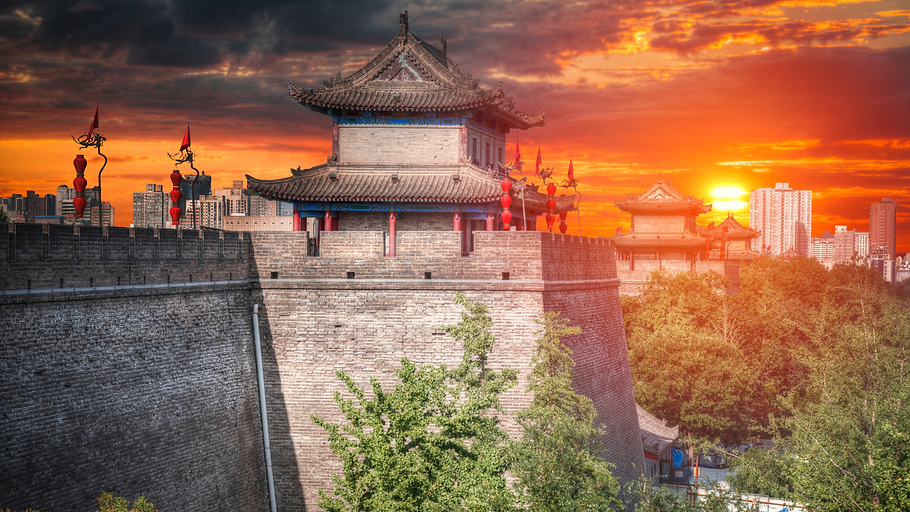
Ancient City Wall
The Xi'an Ancient City Wall is a historic fortification that encircles the old city of Xi'an. Originally built in the 14th century during the Ming Dynasty, the wall was constructed to protect the city from invaders and served as a crucial part of the defense system of the ancient capital. The wallis a symbol of the city's rich history and is considered one of the top attractions in Xi'an.


Terracotta Army
Emperor Qinshihuang's Mausoleum Site Museum is known as the "8th Wonder
of the World". In 1974, while digging a well in Lintong, Shaanxi, farmers stumbled upon lots of broken clay figures, with subsequent archaeological excavations finally unveiling the "Terracotta Army". Displayed in three pits, the Terracotta Army covers an area of over 20,000 square meters. Inside the pits are more than 80,000 items, including various terracotta figures, wooden chariots,bronzeware, etc. The lifelike figures and exquisite painting craftsmanship gain ceaseless praises from visitors at home and abroad.

Giant Wild
Goose Pagoda
Soaring 64 meters above Xi'an, the seven-tiered Giant Wild Goose Pagoda stands as a timeless symbol of ancient Silk Road exchange. Built in 652 AD during the Tang Dynasty, this brick pagoda was commissioned by Emperor Gaozong to safeguard precious Buddhist scriptures brought from India by the legendary monk Xuanzang after his 17-year pilgrimage. Its distinct square-based, tapered design—echoing classical Indian stupa architecture—features gracefully curved eaves and windows that frame panoramic city views from its summit. Nestled within the serene Ci'en Temple complex, the pagoda witnessed Xi'an’s golden age as the world’s largest city.

Muslim Quarter
Muslim Quarter is a vibrant, centuries-old enclave where Chinese and Islamic cultures intertwine along lantern-lit alleyways. Born from Silk Road trade in the Tang Dynasty (618-907 AD), this labyrinth near the Great Mosque pulses with the legacy of Hui Muslim communities. Wander past Qing Dynasty architecture adorned with Arabic calligraphy, browse stalls selling persimmon cakes and nut sculptures, then sip pomegranate juice as vendors’ cries mingle with prayer calls. By night, red lanterns cast glow on bustling crowds, artisan workshops, and hidden courtyards where generations-old recipes come alive. More than a food haven, it’s a living museum of resilience – where every spice tells a story of cultural fusion.

Xi´an